Pasar al contenido principal
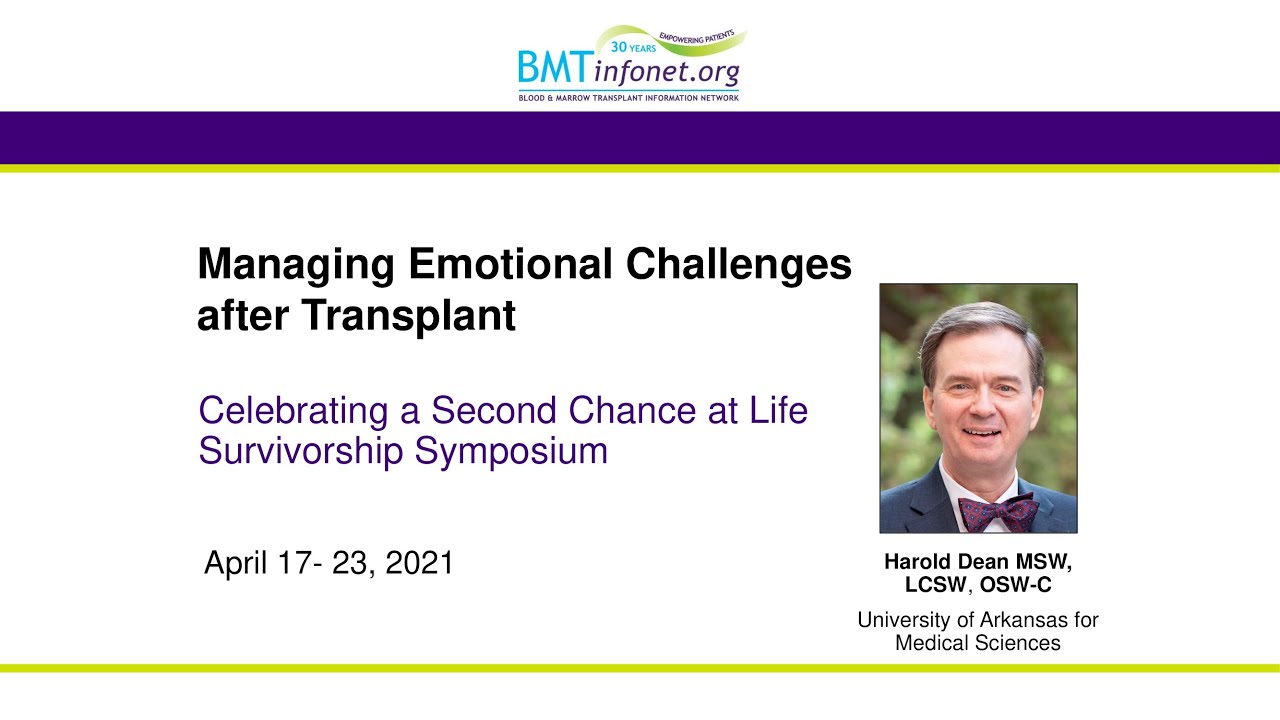
A stem cell transplant can be emotionally challenging and disrupt normal life and relationships, at least for a time. Acknowledging these challenges and cultivating social and professional support can help restore emotional health. This presentation describes common emotions patients feel after transplant and some effective methods for coping with them.
The number of long-term survivors of hematopoietic cell transplants (bone marrow, stem cell, and cord blood) is dramatically increasing. However, up to two thirds of survivors report at least one chronic health condition as a late effect of treatment. This presentation describes these effects and interventions to treat them.
The practice of mindfulness has proven benefits for transplant patients. It reduces stress and improves psychological health and well-being. This presentation describes several mindfulness practices and offers tips on how to integrate them into your daily life.
Chronic graft-versus-host disease occurs in more than 50% of patients transplanted with cells from a donor. The skin is affected most frequently by GVHD. This presentation describes different types of GVHD of the skin. It also discusses the most common symptoms and promising treatments for this problem.
Bone marrow and stem cell transplant recipients have an increased risk of osteoporosis and bone fractures. Life-style changes can improve bone health, but in more serious cases, medications may be required. This presentation reviews risk factors and effective remedies for bone problems in transplant patients.
Neuropathy (nerve damage) is common after high-dose chemotherapy and a stem cell transplant. Peripheral neuropathy can cause tingling or pain in the arms, hands, legs and/or feet. Other types of neuropathy can cause symptoms ranging from dizziness when standing, problems with digestion and urination to loss of balance, numbness, and muscle atrophy.
Graft-versus-host disease occurs when a donor’s cells attack a transplant recipient’s organs and tissues. GVHD can occur throughout the gastrointestinal system as well as in the liver. This presentation describes how GVHD can attack the mouth, esophagus, stomach, large and small bowels and liver.
Men who undergo a stem cell or bone marrow transplant may experience problems with sexual health and satisfaction after transplant. Physical problems, like erectile dysfunction, can trigger emotional difficulties that add to the problem. This program describes the most common sexual problems men face after transplant, and some effective treatments.
Returning to work after transplant poses many challenges. Several Federal and state laws provide workers who are struggling with a serious illness, and in some cases, their family members, protection against job discrimination, guaranteed time off work to recover or care for a loved one, job security while off work, and/or money to help replace lost wages.
Recovering from a transplant poses many challenges for a patient’s personal relationships with spouses, partners, family members, and friends. While they may wish for a return to “normal,” this may not be possible and new standards for “normal” may emerge. This presentation offers strategies for navigating these changing relationships and fostering positive outcomes