Pasar al contenido principal
Ocular graft-versus-host disease (GVHD) can cause tear loss, dry eyes, irritation, pain and vision problems and can impact quality of life after transplant. This presentation will discuss symptoms of ocular GVHD and effective treatments.
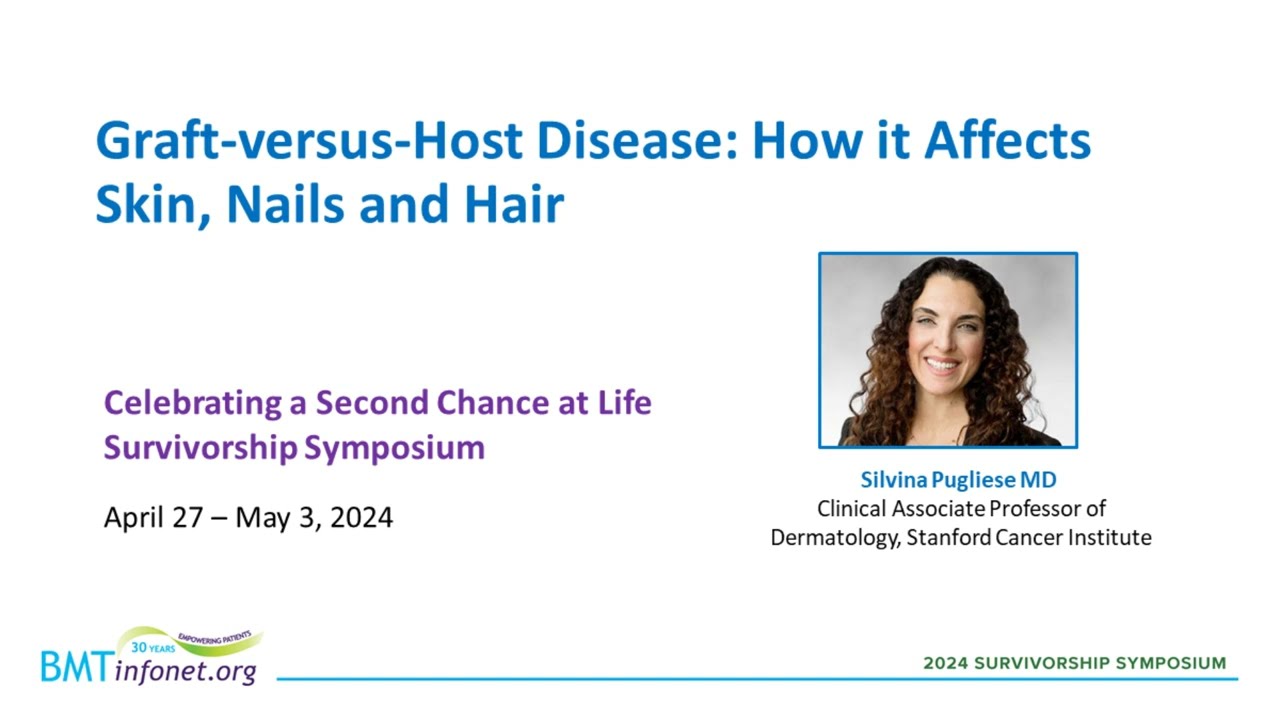
Graft-versus-host disease (GVHD) often affects the skin, nails, hair, mouth and/or genitals. This presentation will discuss potential treatments for various forms of acute and chronic skin GVHD, dry skin care, sun protection and how to monitor your skin for skin wounds and skin cancer.
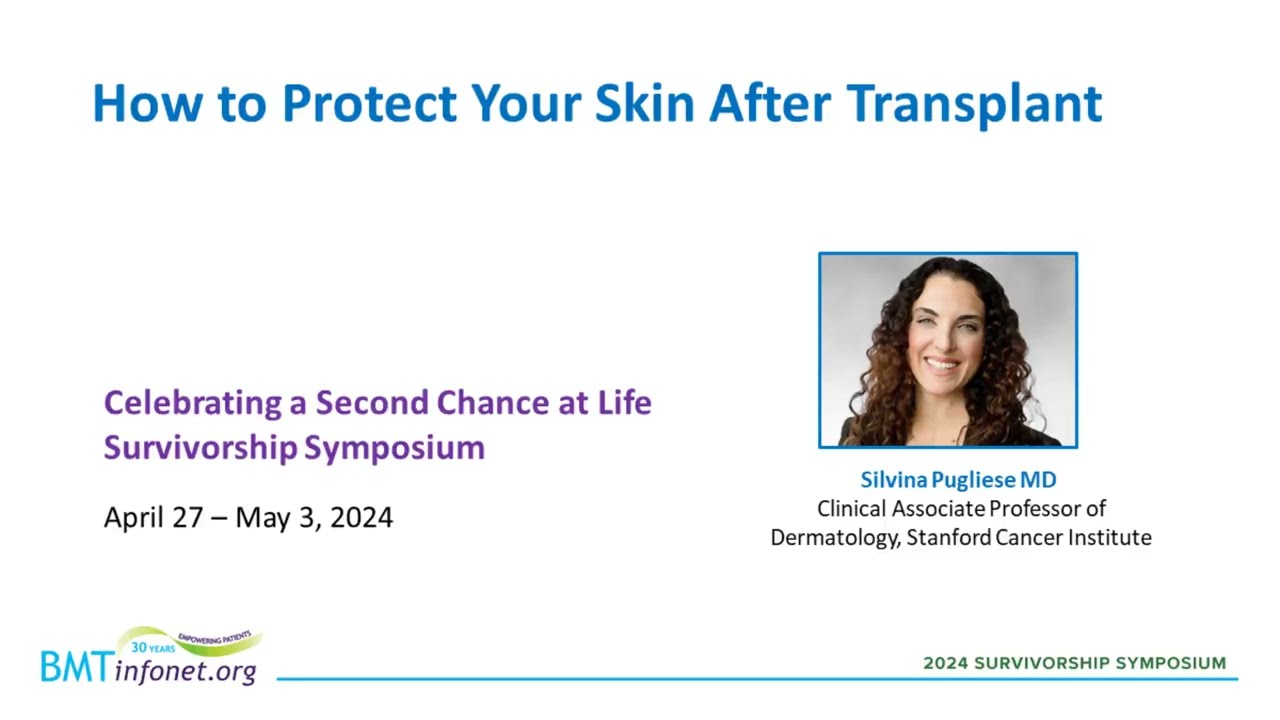
Bone marrow/stem cell transplant survivors can experience a number of skin problems after transplant. Monitoring yourself for skin abnormalities and seeking prompt treatment from a dermatologist can help relieve symptoms and prevent serious problems.
This presentation discusses psychosocial challenges that can arise before, during and after a bone marrow/stem cell transplant or CAR T-cell therapy, strategies to manage them, resources that can help, and when to consult a mental health professional.
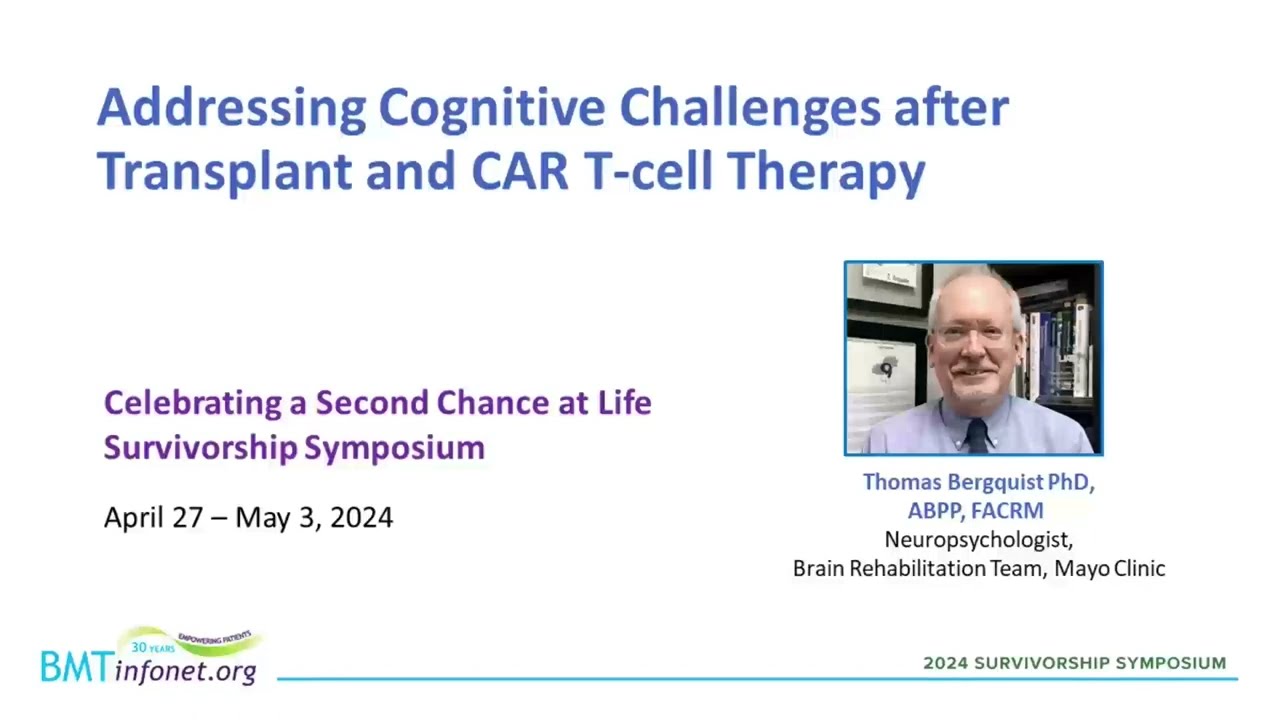
Cognitive challenges, especially memory problems, can develop after a bone marrow/stem cell transplant or CAR T-cell therapy. This presentation describes strategies that you can use to address memory problems and improve your quality of life.
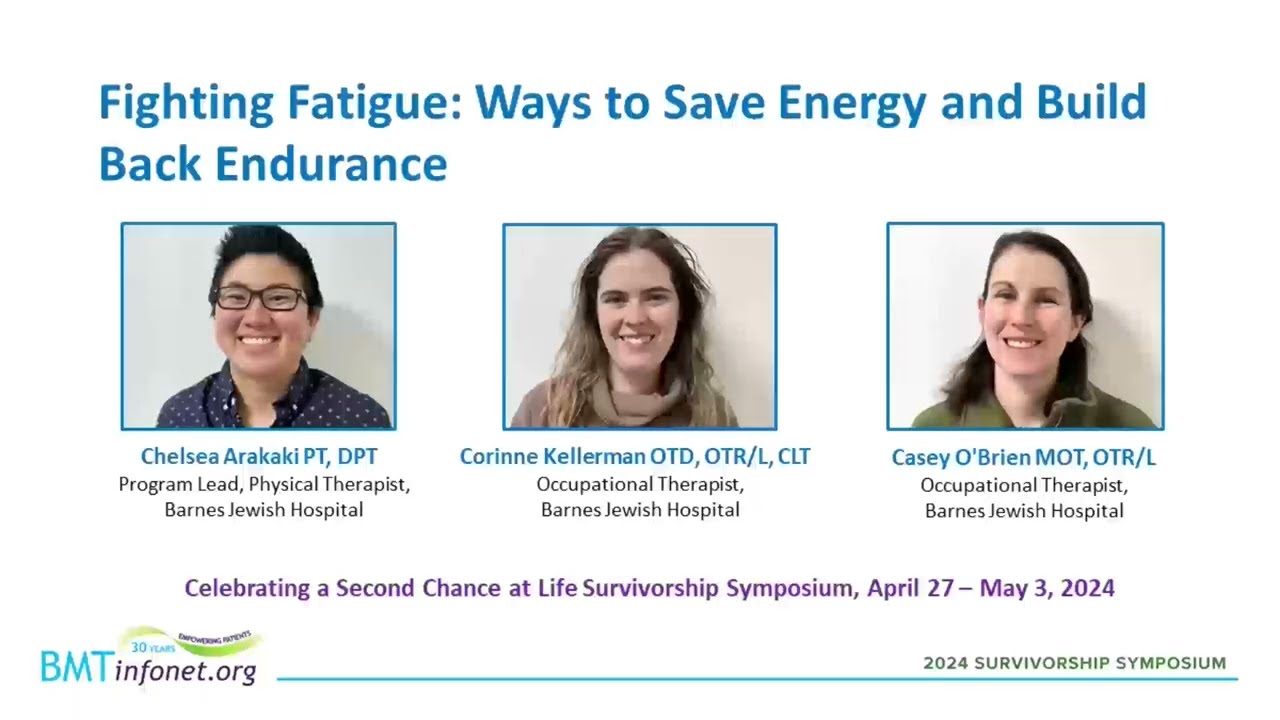
Cancer-related fatigue can be managed, and endurance can be rebuilt. Learn about strategies to conserve energy; adaptive equipment that can help with energy conservation; and improving stamina and strength through exercises that patients can perform at home. Also learn to identify when it is appropriate to seek help from a physical or occupational therapist.
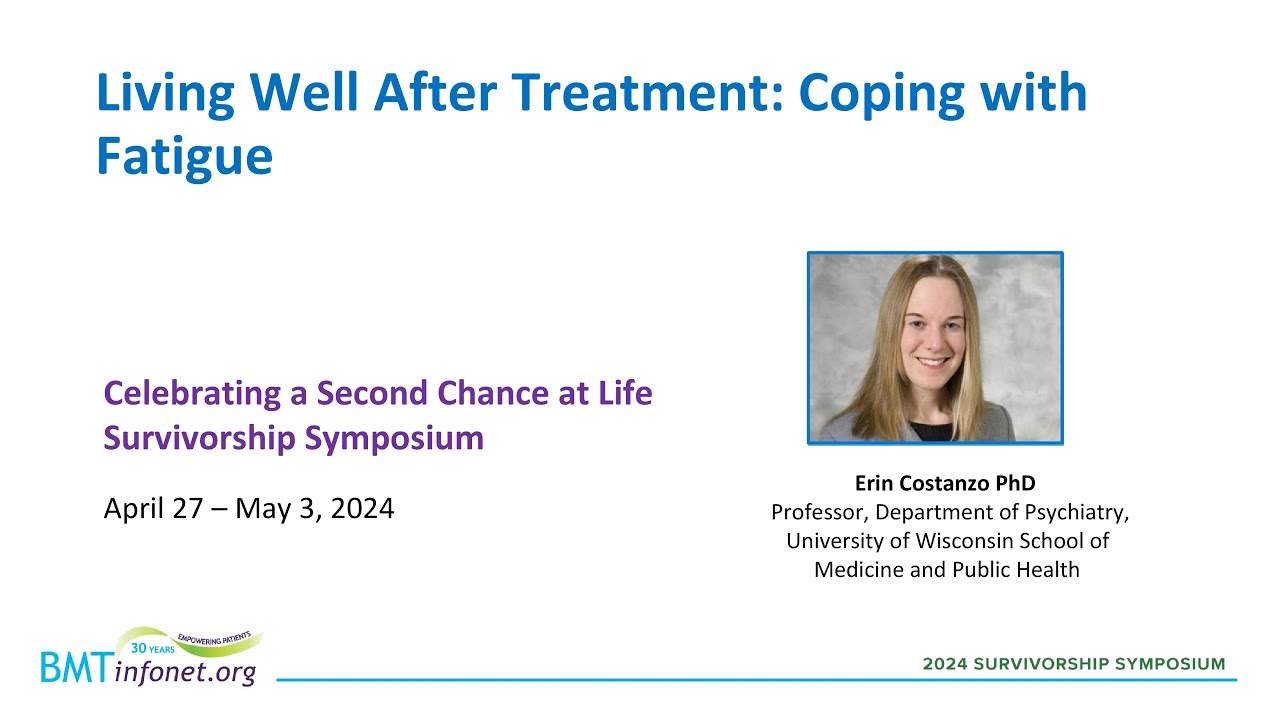
Many patients experience significant fatigue for months or years after a stem cell transplant or CAR T-cell therapy. Learn a variety of strategies you can try to manage chronic fatigue and lessen its impact on your daily activities.
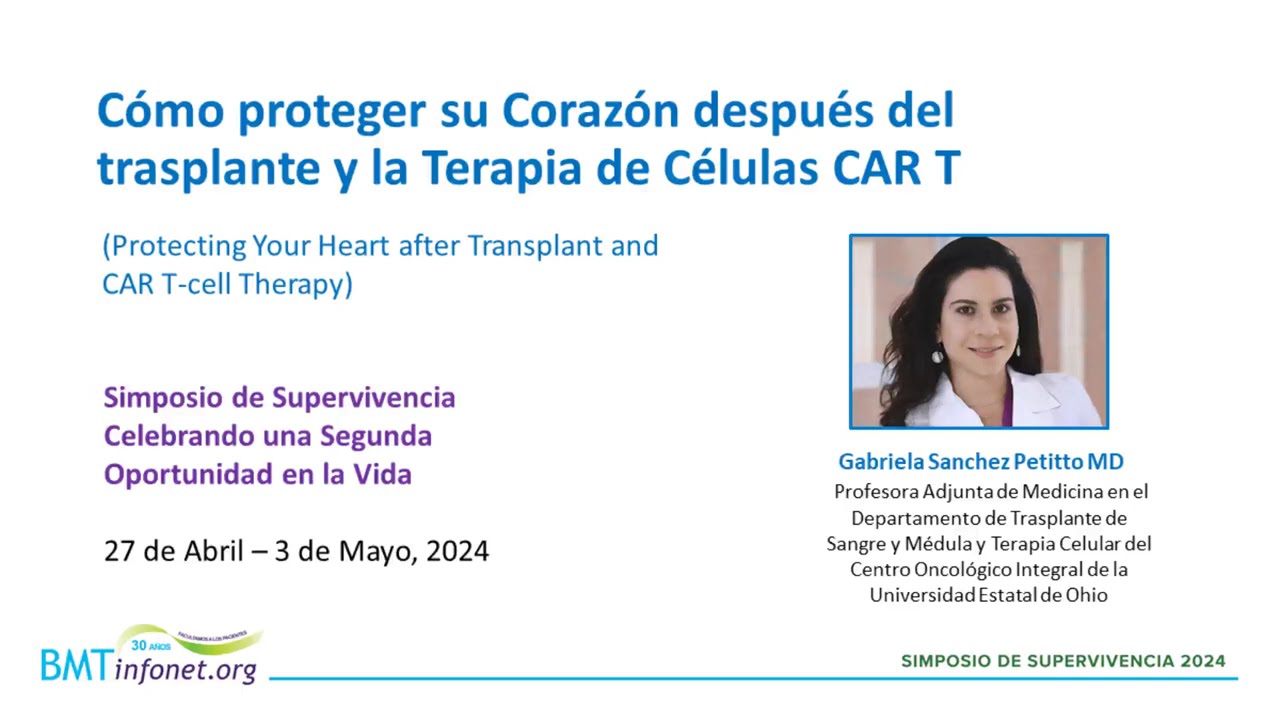
El trasplante y la terapia de células CAR T han curado y prolongado las vidas de muchísimas personas con cánceres hematológicos. Sin embargo, los sobrevivientes pueden presentar complicaciones cardiovasculares en el corto y largo plazo. Conozca cuáles son esas complicaciones y cómo prevenirlas.
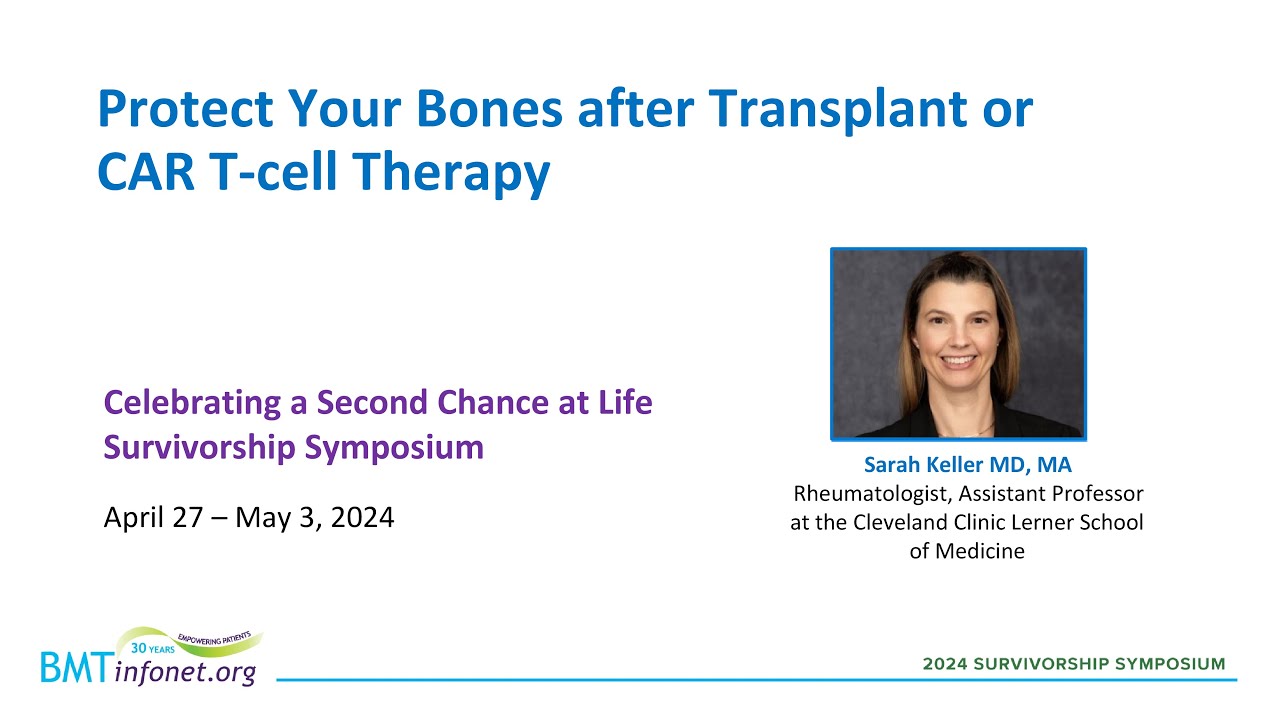
People who have undergone a bone marrow or stem cell transplant have an increased risk of osteopenia (loss of bone density), osteoporosis and bone fractures. Periodic bone density tests are needed to monitor bone health so that therapies can started early to prevent or reverse bone loss.
Pueden desarrollarse nuevos cánceres después de un trasplante de células madre. Esta presentación describe qué tipos de cánceres pueden desarrollarse, los factores de riesgo y las medidas que puede tomar para prevenir y detectar nuevos cánceres después del trasplante.