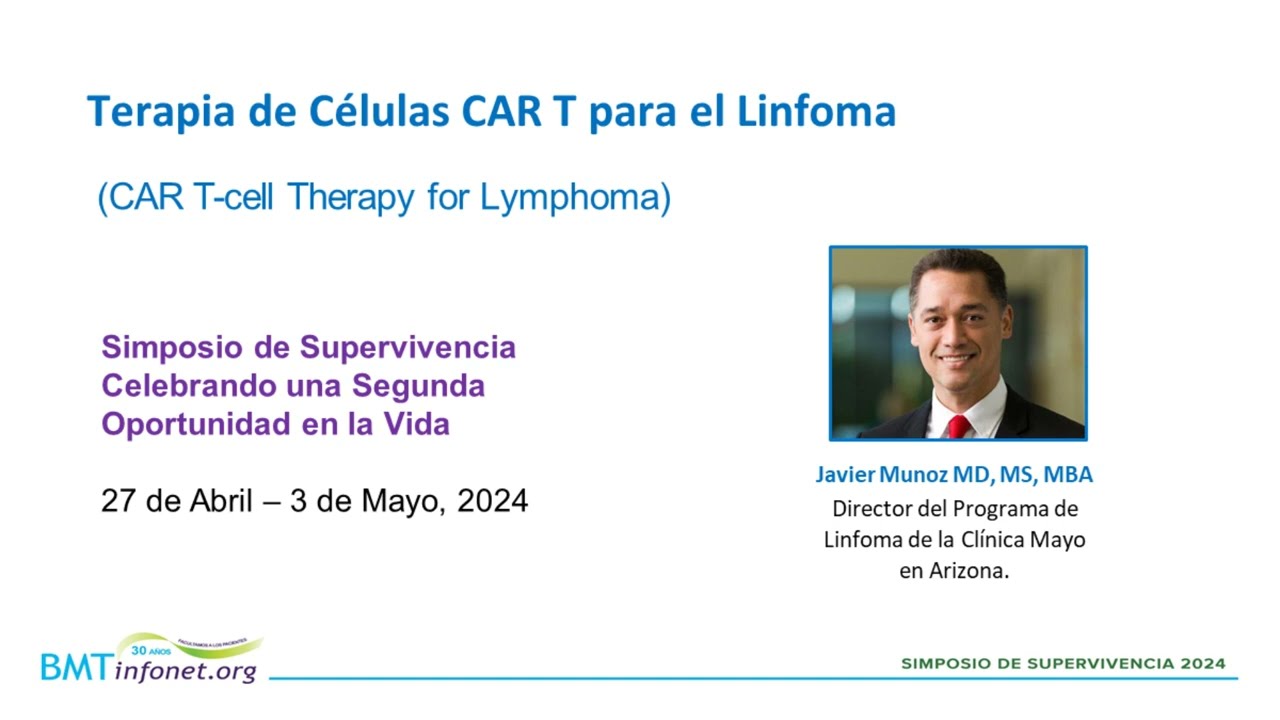
La terapia de células CAR T es un tratamiento nuevo para pacientes que tienen ciertos tipos de linfoma no Hodgkin. Conozca lo que implica someterse a una terapia de células CAR T, quién es un buen candidato y los posibles resultados.
Transcript of Presentation: (00:00:01): [Jordan Sexton]: Introduction. Good morning and good afternoon. Welcome to the workshop, Men's Sexual Health after Transplant. My name is Jordan Sexton and I will be
Pain with sex and a decreased desire for sex are common in women after cancer treatment. This presentation explains how the sexual response cycle works, medical interventions you can use to address genital health problems after transplant or CAR T-cell therapy, and other strategies you can use to regain intimacy with your partne
La neuropatía (daño a los nervios) es común después de un trasplante de células madre. Obtenga información sobre los diferentes tipos de neuropatías que pueden desarrollarse, los síntomas comunes, cómo se diagnostican las neuropatías y las terapias que se utilizan para tratarla.
Many bone marrow/stem cell transplant patients experience neuropathy (nerve pain) after transplant. This presentation describes the various types of neuropathy patients may experience and reviews popular treatment options.
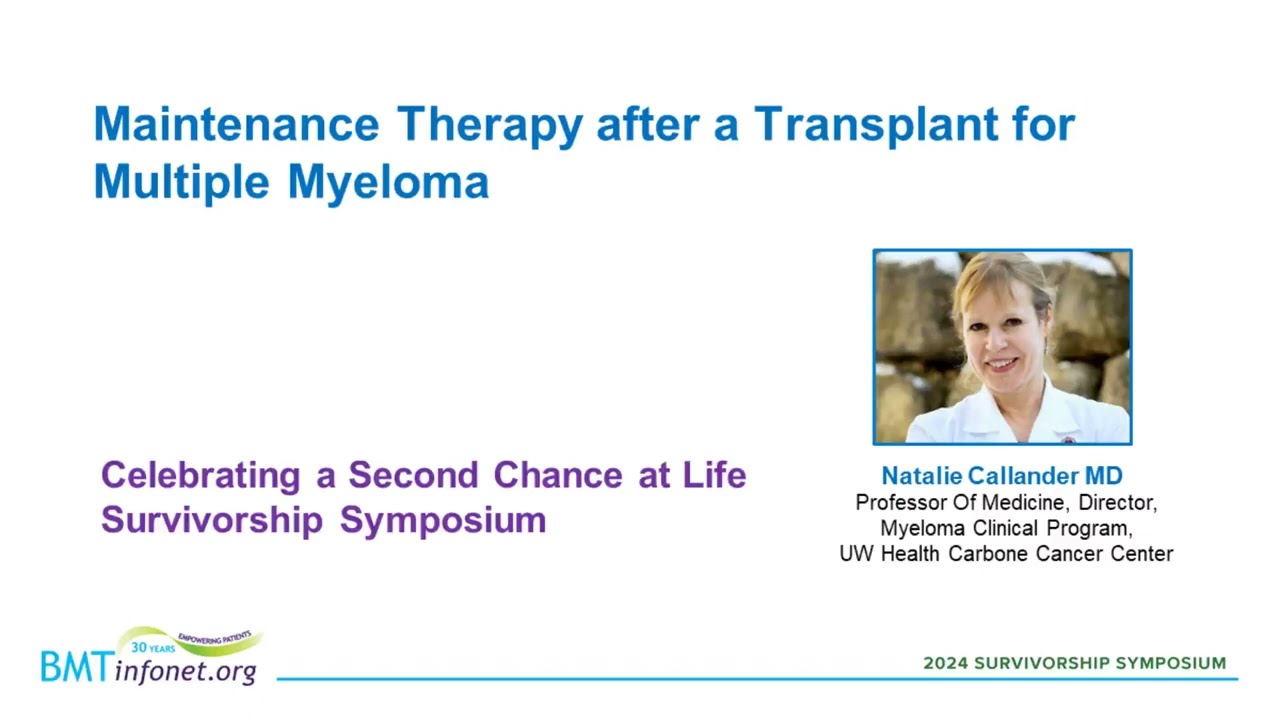
Maintenance therapy after a stem cell transplant is used to decrease early death, increase time to progression and improve the quality of life in patients with multiple myeloma. Dr. Callander provides an overview of the history of maintenance therapy and discusses the new and exciting treatment options available. She also delves into potential future therapies that are currently under study.
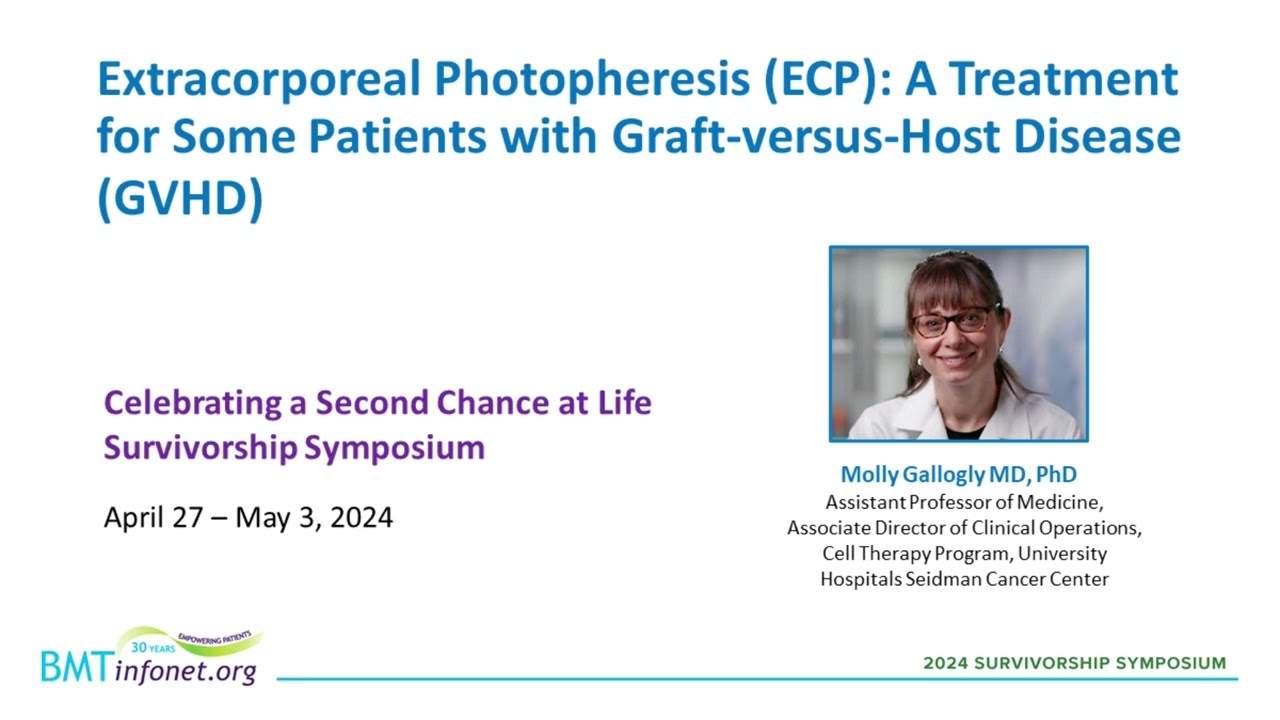
Graft-versus-host disease (GVHD) is a common complication after a stem cell transplant. Extracorporeal photopheresis (ECP) can be an effective treatment for certain types of GVHD. This presentation explains how ECP works and its potential benefits for patients with significant GVHD.
Graft-versus-host disease (GVHD) is a common complication after a bone marrow/stem cell transplant using donor cells (allogeneic transplant). This presentation will discuss current techniques to prevent GVHD, new drugs to treat acute and chronic GVHD and clinical trials testing new GVHD therapies.
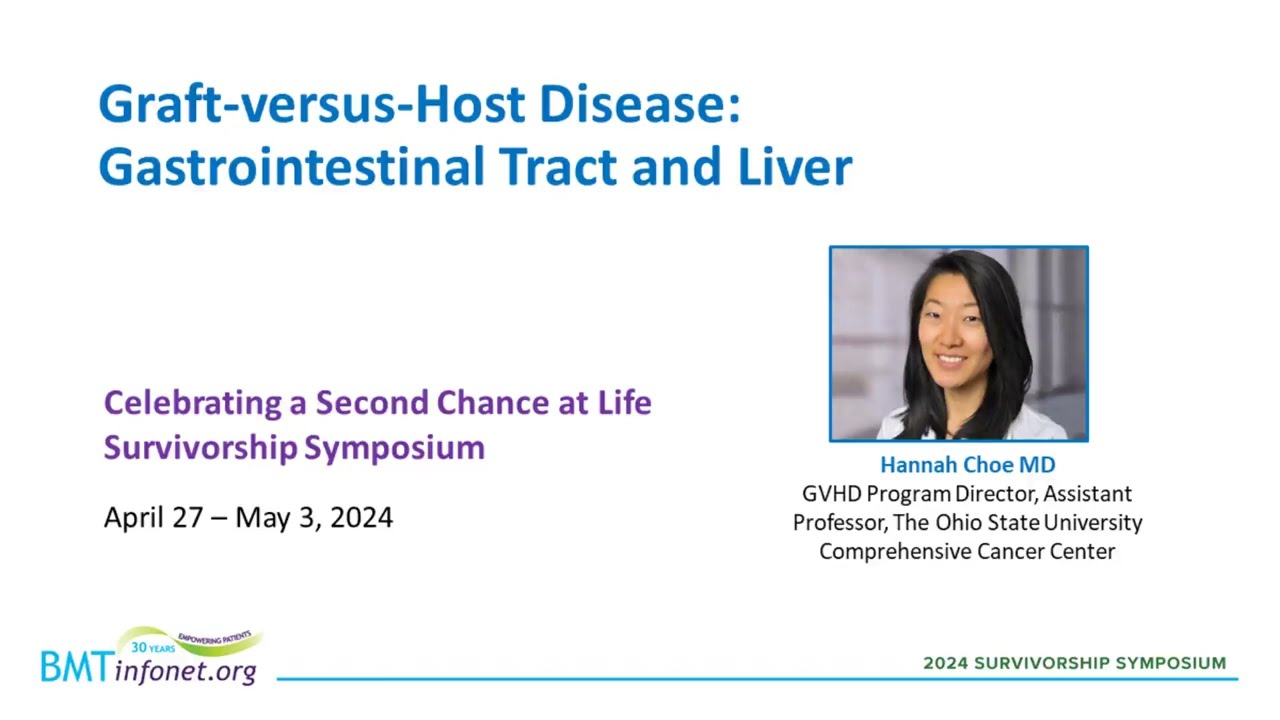
Graft-versus-host disease (GVHD) frequently affects the gastrointestinal tract and liver after a stem cell transplant using donor cells (allogenic transplant). There are two types of GVHD: acute and chronic. This presentation discusses the incidence, symptoms, risk factors for each and treatment options.
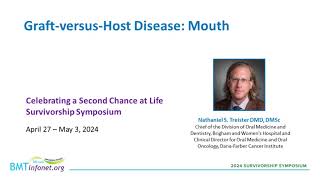
Chronic graft-versus-host disease (GVHD) of the mouth is a common side-effect of stem cell transplantation. This presentation describes the major types or oral GVHD and discusses the most effective remedies to treat this problem.